Activation of Makkah Defence Pact? PM Shehbaz, Saudi Crown Prince to Meet as Regional Tensions Escalate
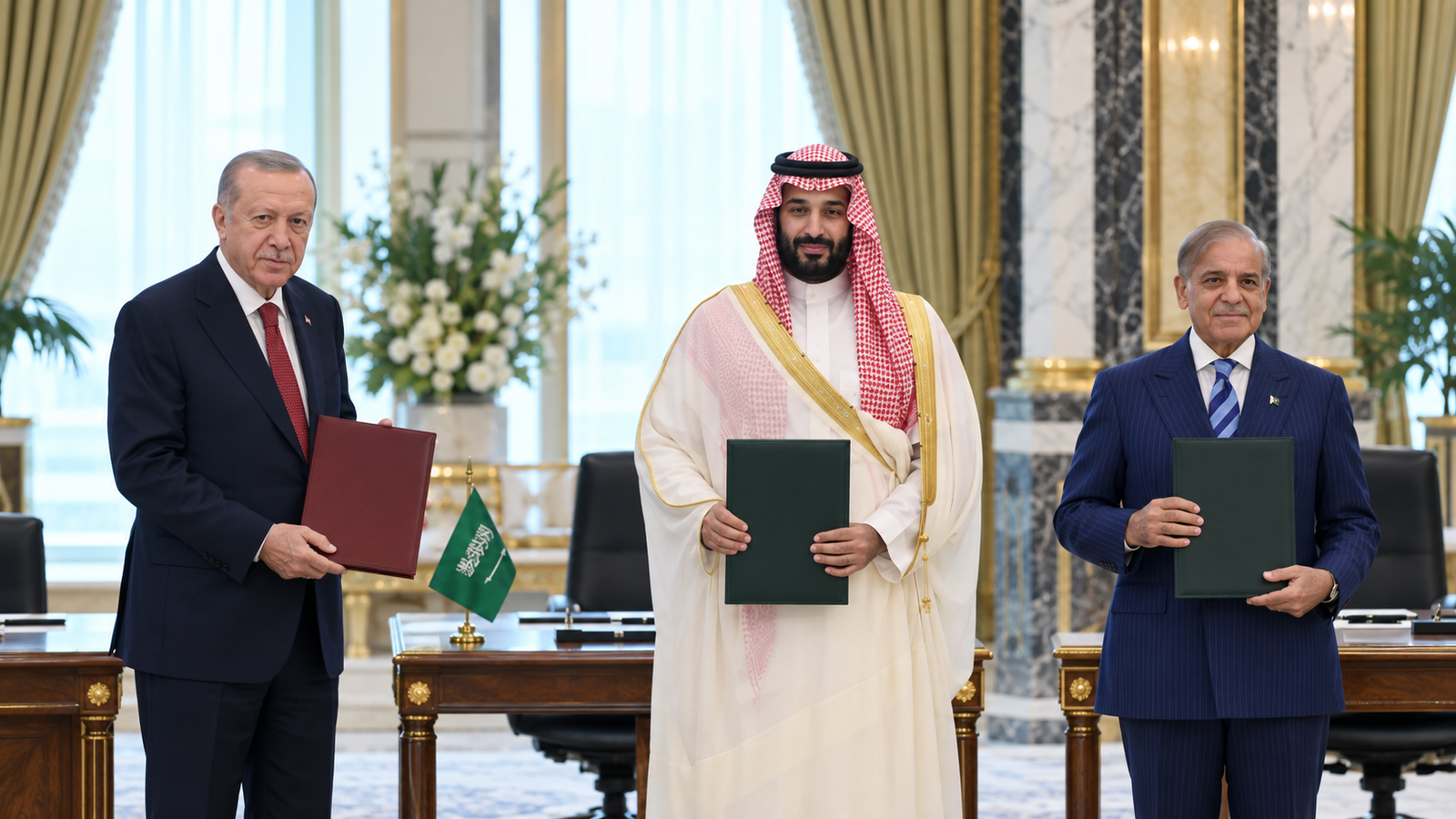
Prime Minister Shehbaz Sharif and Saudi Crown Prince Mohammed bin Salman are expected to meet at an early date as regional tensions intensify following fresh Houthi attacks on Saudi Arabia. The expected meeting has drawn attention to the Makkah Joint Defence Agreement, a trilateral pact signed by Pakistan, Saudi Arabia and Türkiye in August 2026, and to whether its collective-defence provisions could now be tested.
On September 13, Shehbaz held a telephone conversation with the Saudi crown prince in which he strongly condemned recent Houthi attacks on Saudi civilian and economic infrastructure. According to Pakistan’s Prime Minister’s Office, Shehbaz expressed complete solidarity with the Saudi leadership and people and said the attacks threatened regional peace, global economic stability and energy supplies. The two leaders agreed to remain in close contact and said they looked forward to meeting each other at an early date.
The latest escalation has revived questions about the Makkah Joint Defence Agreement, signed in Makkah on August 7 by Pakistan, Saudi Arabia and Türkiye.
Pakistan’s Foreign Ministry says the accord is defensive in nature and is not directed against any country. Its key provision states that an armed attack against one of the three signatories will be considered an attack against all, in line with the right of collective self-defence under Article 51 of the United Nations Charter.
Houthi Attacks Put Pact Under Spotlight
The issue became more urgent after Houthi missile and drone attacks targeted Saudi civilian and energy facilities.
Pakistan publicly condemned the strikes and reiterated support for the Kingdom’s sovereignty, security and territorial integrity. Defence Minister Khawaja Asif also said that continued attacks on Saudi Arabia could activate the new defence arrangement, bringing the pact into focus less than two months after it was signed.
However, there is an important distinction between saying the pact could be activated and confirming that it has been activated.
On September 10, Pakistan’s Foreign Ministry said no military response had been discussed under the agreement in relation to the Houthi attacks. This means there is currently no official confirmation that Pakistan or Türkiye has committed troops or begun military operations under the Makkah pact.
Pact Designed for Collective Deterrence
The agreement itself was presented by the three governments as a mechanism for deterrence and regional stability. Pakistani officials have repeatedly stressed that it is defensive rather than an alliance aimed at a specific state.
The pact also builds on Pakistan’s longstanding security relationship with Saudi Arabia and comes after the two countries signed a separate Strategic Mutual Defence Agreement in September 2025. That bilateral agreement similarly stated that aggression against either country would be considered aggression against both.
The expected Shehbaz-Mohammed bin Salman meeting is therefore significant because it could provide clearer political direction on how the three-country agreement will be interpreted during an active regional crisis.
So far, Pakistan’s emphasis has remained on diplomacy. During the September 13 call, Shehbaz said he, Field Marshal Syed Asim Munir and Deputy Prime Minister Ishaq Dar would continue efforts to defuse tensions and restore peace in the region.
Regional instability has also raised concerns about energy markets and maritime security. Recent Houthi attacks have targeted Saudi infrastructure while fighting in Yemen has intensified, adding pressure to an already volatile Middle East. Any widening of the confrontation could affect oil supplies, shipping routes and the security calculations of Gulf states.
For now, the Makkah Defence Pact has not been officially activated.
What is confirmed is that Pakistan has expressed strong support for Saudi Arabia, the pact’s collective-defence clause remains relevant, and Shehbaz and Mohammed bin Salman intend to meet at an early date. Their talks could become an important indicator of whether the three allies continue to prioritise diplomacy or move toward deeper security coordination if attacks on Saudi Arabia continue.
Reader feedback
Sign in to join the discussion.