IMF Demands FBR Access To Public Officials’ Bank Accounts
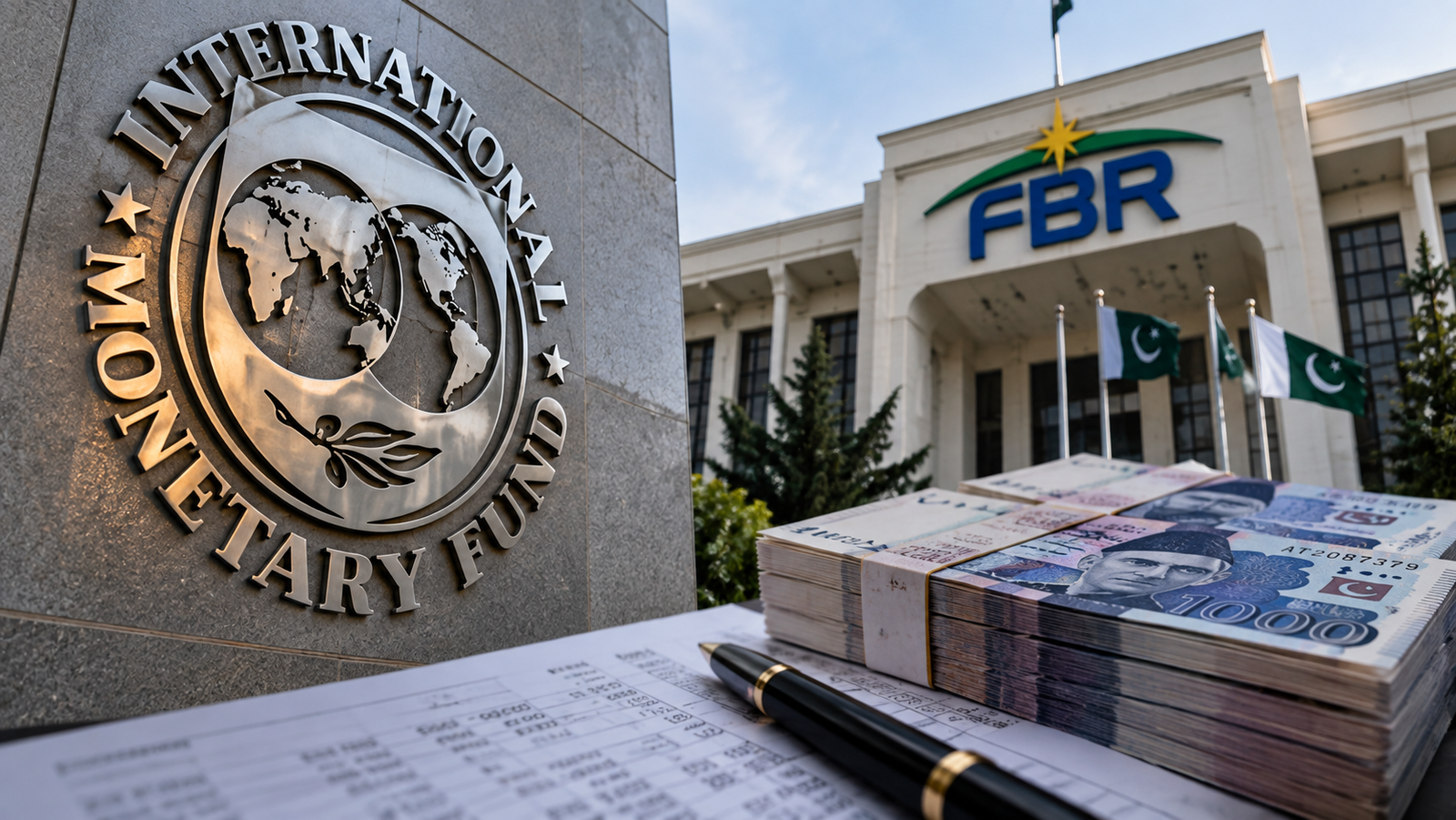
The International Monetary Fund (IMF) has renewed its focus on financial transparency in Pakistan, with reforms aimed at strengthening the Federal Board of Revenue's (FBR) role in monitoring the declared assets of public officials.The development comes as Pakistan continues discussions with the IMF under its $7 billion loan programme.
The latest talks, held on September 28, 2026, included discussions on government employees' asset declarations, taxation and administrative reforms. The initiative aims to improve financial accountability among government officials and strengthen Pakistan's anti-money laundering and anti-corruption framework.
Under the IMF's governance reform agenda, Pakistan is required to strengthen the system for declaring and verifying assets held by senior government officials. The programme includes extending banks' access to asset declarations of public officials, particularly those serving in Grade 17 to Grade 22 positions.
The reform is intended to help banks conduct anti-money laundering and counter-financing of terrorism checks when assessing customers' financial profiles. The IMF has also called for improved transparency in the declaration of assets, including digital submission and risk-based verification.
The Federal Board of Revenue is playing a central role in implementing the financial transparency measures. Under the agreed framework, banks can access relevant asset declarations through a dedicated digital system for compliance purposes.The arrangement covers officials working in federal and provincial governments, autonomous bodies, corporations and government-owned companies.
According to a report published by Business Recorder on June 30, 2026, banks submitted 2,628 applications for access to public servants' asset declarations between December 2025 and May 2026. Of these, 2,205 applications were approved, while 423 were rejected or refused.
The figures demonstrate the implementation of the new verification mechanism. However, access to asset declarations should not be confused with unrestricted access to officials' private banking transactions.
Pakistan has introduced legislative changes to strengthen the declaration of assets by civil servants. A new Section 15-A was added to the Civil Servants Act, enabling the government to regulate and monitor the financial conduct of government employees.
Under the reform framework, officers from Grade 17 to Grade 22 are required to submit asset declarations, with provisions for publishing relevant information online. The government has also been working on a centralized digital system for collecting and verifying these declarations.
According to reporting published on September 25, the government plans to publish selected asset information of senior civil servants by December 2026. Officials have cited security and privacy concerns regarding the publication of complete financial details.
The IMF's governance and anti-corruption agenda seeks to address weaknesses in Pakistan's institutional accountability framework. Financial declarations can help authorities identify discrepancies between reported income, declared wealth and financial information available through lawful verification procedures.
The reforms are also connected to Pakistan's efforts to improve compliance with international anti-money laundering standards. By strengthening financial scrutiny, the government aims to improve transparency and public confidence in state institutions.
The proposed system could increase scrutiny of the financial declarations submitted by senior government employees. Banks will be able to use authorized access to relevant declarations for compliance checks, while government departments will be responsible for implementing disclosure and verification requirements.
The initiative also raises questions about how financial privacy, data protection and accountability will be balanced. The government has indicated that confidential personal information will receive appropriate protection under the disclosure framework.
The latest discussions form part of the fourth review talks under Pakistan's $7 billion IMF programme. The IMF mission has held meetings with the FBR, Finance Division and Establishment Division to assess progress on taxation and governance-related commitments.
The implementation of asset declaration reforms remains an important component of Pakistan's broader institutional reform agenda. As discussions continue, the focus will remain on strengthening financial transparency while ensuring that the system operates within established legal and privacy safeguards.
Reader feedback
Sign in to join the discussion.